
Microsoft (MSFT) is the quiet compounder that survived three tech crashes. Our daily price data for MSFT starts on March 13, 1986 — and the story since then is a tour of American business history.

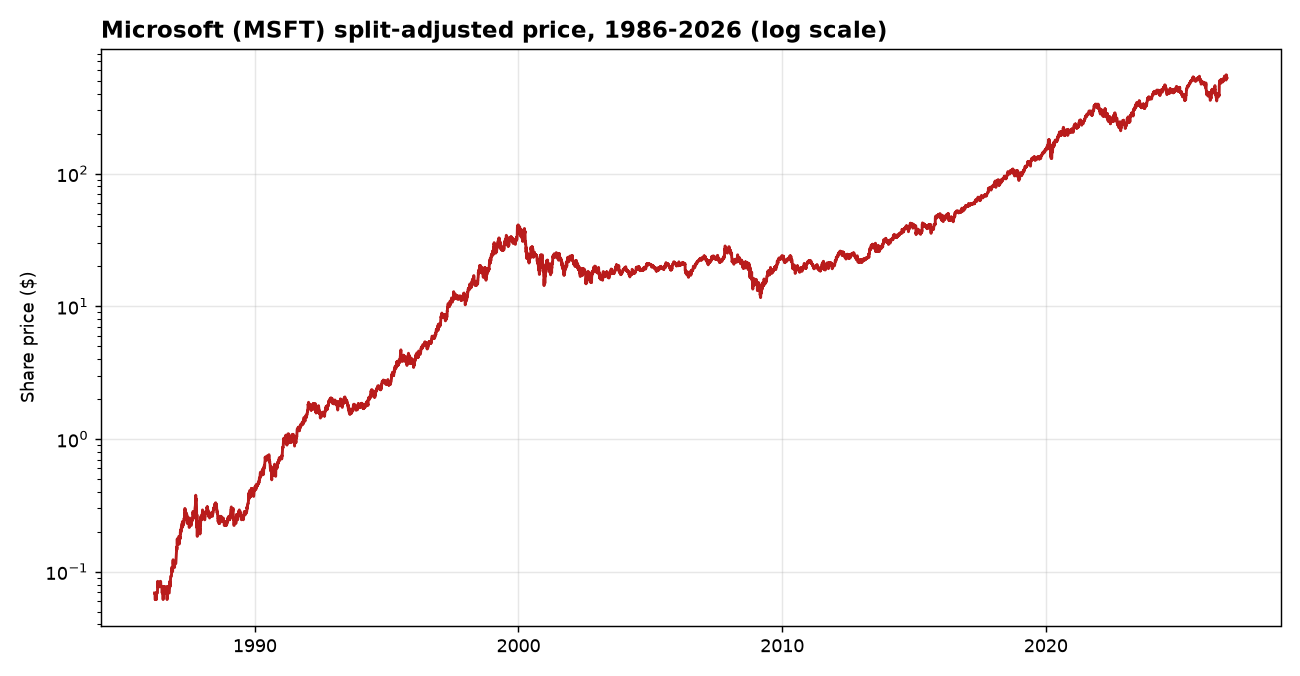
On price alone, $1,000 became about $7,592,464. With dividends reinvested, it became $8,878,322 — the dividends contributed roughly $1,285,858.
The price, decade by decade
| Year (start of year) | Split-adjusted share price |
|---|---|
| 1986 | $0.0690 |
| 1996 | $3.87 |
| 2006 | $20.63 |
| 2016 | $48.34 |
| 2026 | $472.94 |
The worst fall
The deepest drawdown in the data ran from December 27, 1999 to March 09, 2009: -71.7% from peak to trough. Every long-lived company has a fall like that in its past. The ones that survive it are the ones that become the stories we tell.
The story
Microsoft (MSFT) was founded in 1975 by Bill Gates and Paul Allen to sell BASIC interpreters for the Altair 8800, the first personal computer — they demonstrated their software to MITS in Albuquerque, New Mexico, in March 1975. When IBM launched its personal computer in August 1981, Microsoft kept ownership of the operating system, MS-DOS, and the PC era made it the dominant software company on earth.
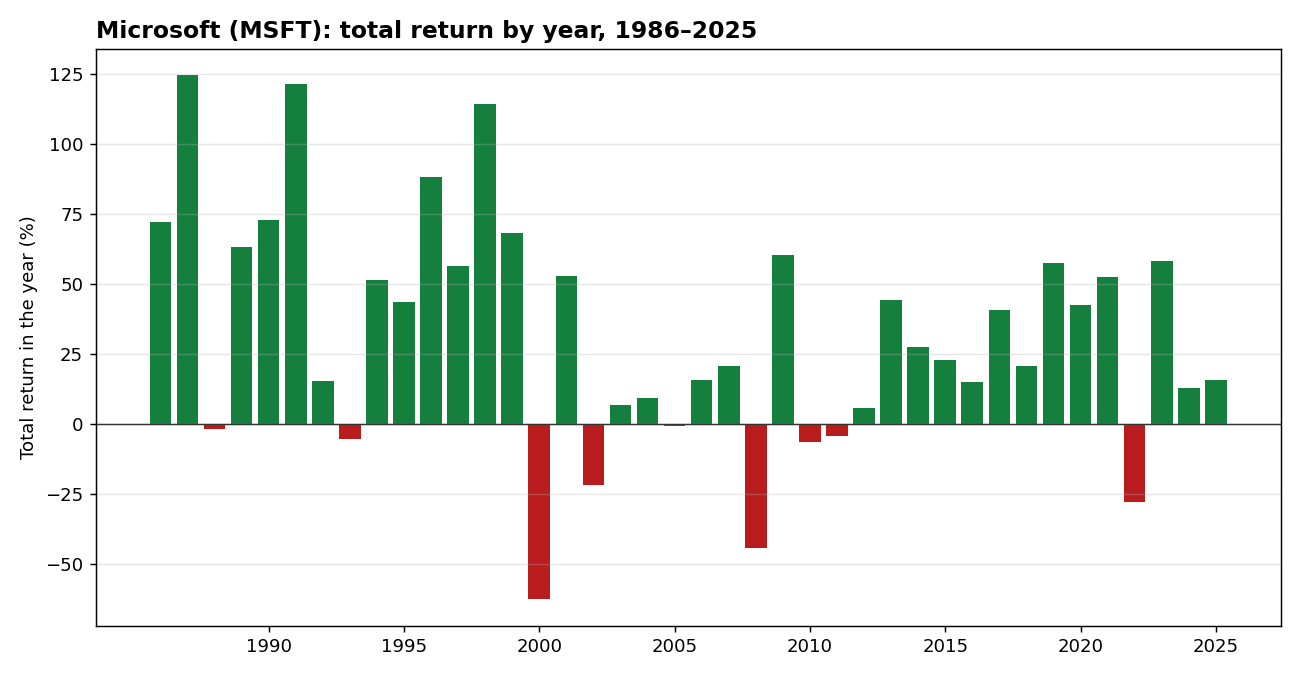
Microsoft went public in 1986 — our price data starts on the IPO day, March 13, 1986. Windows 95 followed in 1995 (the stock rose 44% that year on price alone), and by the late 1990s the company faced a long U.S. antitrust case over how Windows was bundled with PCs. The dot-com crash then cut the stock 63% in 2000, and it took years to recover.
Satya Nadella became CEO in 2014 and pivoted the company to cloud computing, built on the Azure platform. The stock rose 28% that first year on price alone. Today Microsoft is one of the most valuable companies on earth, built on Windows, Office, and the cloud.
The CEO
Bill Gates co-founded Microsoft with Paul Allen in 1975 and led it as chief executive until January 2000. Steve Ballmer, hired by Gates in 1980, took over as CEO in 2000 and ran the company until February 2014. Under Ballmer, sales tripled and profits doubled — but Microsoft missed the rise of smartphones.
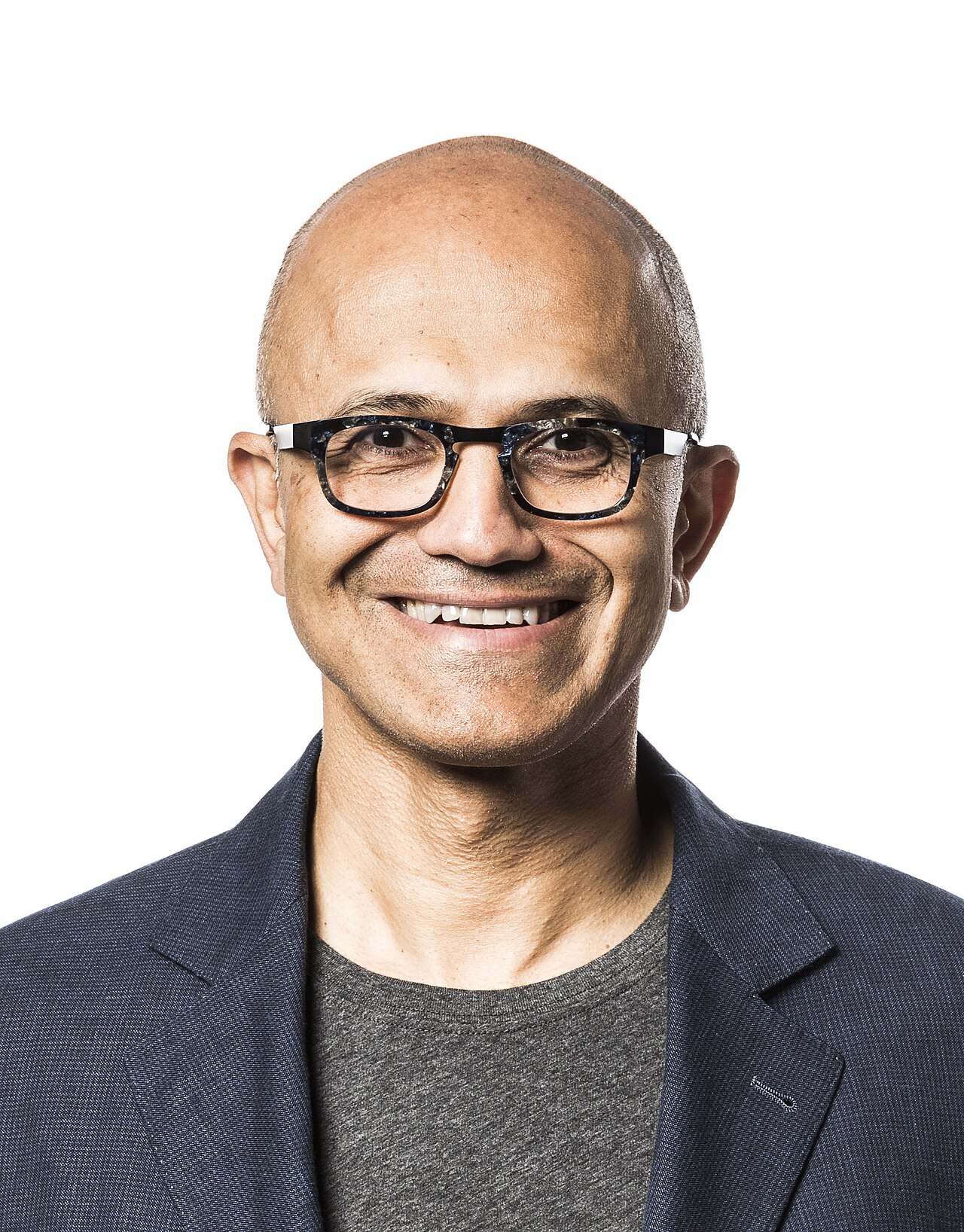
Satya Nadella has been chief executive since February 2014, and chairman since 2021. Before that he ran Microsoft’s cloud and enterprise group. As CEO he bet the company on the cloud — Azure — and turned a Windows company into a cloud company.
The products
Windows (1985). The first version was released on November 20, 1985. Windows 3.0, in 1990, made it a mass-market success — and made Microsoft the default software of the PC era.
Office (1988). The first version was announced on August 1, 1988: Word, Excel and PowerPoint, all three still at the core of the suite today.
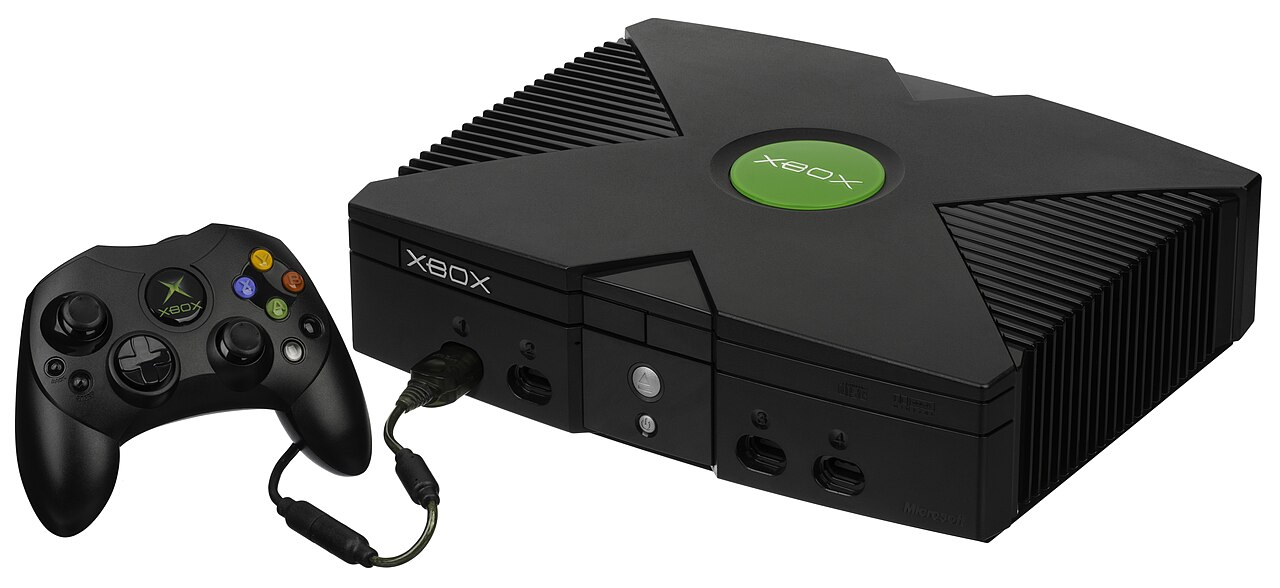
Xbox (2001). Launched in November 2001, it was the first video-game console from an American company since the Atari Jaguar — and over 24 million were sold by May 2006.
Azure (2010). Introduced in October 2008 and launched as Windows Azure in February 2010, renamed Microsoft Azure in March 2014. It is the platform Nadella’s cloud bet was built on.
Who owns it
Microsoft is owned by its shareholders — and the largest ones are, again, the index funds. But unlike Apple and Coca-Cola, Microsoft still has a famous individual owner near the top.
| Largest holders | Shares | Share of the company |
|---|---|---|
| Vanguard Group | 653.6 million | 8.8% |
| BlackRock | 607.4 million | 8.2% |
| State Street | 315.7 million | 4.3% |
| Steve Ballmer (former CEO) | ~333.3 million | ~4.5% |
Vanguard and BlackRock hold Microsoft mostly through index funds. Steve Ballmer, the former chief executive, is the largest individual holder: about 333.3 million shares at his last disclosure in 2014 — roughly 4.5% of today’s share count, if he still holds them. Bill Gates holds under 1%, by a Forbes estimate from September 2026. All eighteen of Microsoft’s current directors and officers together hold about 0.03% of the company.
Source: SEC Form 13F filings, positions as of June 30, 2026 (Vanguard’s total combines its two advisers’ filings); Ballmer’s and Gates’s stakes from Microsoft’s proxy statements and Forbes estimates, as noted. Holdings move every quarter — this is a snapshot of one moment, not a permanent fact.